A Guide to Teaching Tier 2 Vocabulary in Upper Elementary
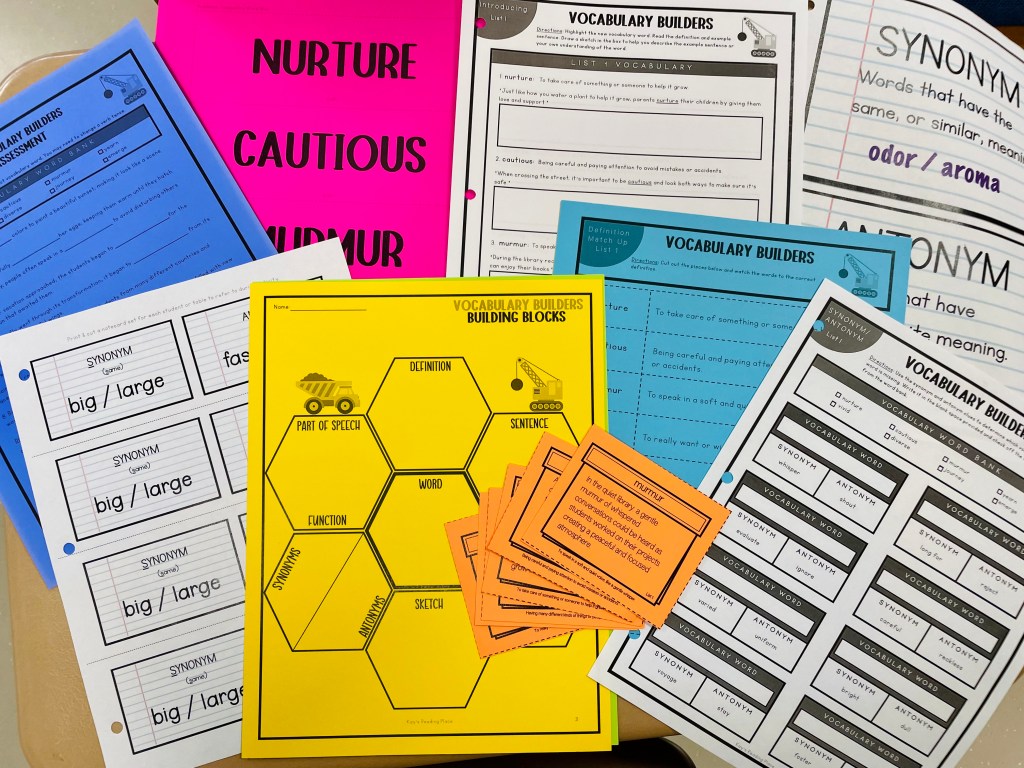
A robust vocabulary is a cornerstone of effective communication and literacy. Sometimes the task of growing our students’ vocabulary banks is daunting. Which words to teach? How to make them stick? Read on for some guidance.
Understanding Tier 2 Vocabulary:
Tier 2 vocabulary consists of words that are crucial for academic success and effective communication across various domains. These words are general enough to be used in a variety of contexts and are often more sophisticated than everyday language. Exposure and practice with Tier 2 vocabulary words like “confirm” and “minimize” will get you more bang for your buck than teaching content words in isolation because Tier 2 words work across domains almost guaranteeing students will come upon them much more often.
Here are a few more examples of Tier 2 vocabulary to get an idea of where your students might come across them:
- Analyze: Break down information into smaller parts to understand it better.
- Example: Students were asked to analyze the poem, identifying its themes and literary devices.
- Evaluate: Assess or judge the quality, significance, or effectiveness of something.
- Example: The class worked collaboratively to evaluate different solutions to the environmental issue.
- Contrast: Identify differences between two or more things.
- Example: The students were able to contrast the main characters in the novel, highlighting their unique traits.
Best Practices for Teaching Tier 2 Vocabulary:
- Contextual Learning:
- Introduce words within a meaningful context, such as during literature discussions, science experiments, or social studies projects.
- Example– While reading a historical fiction novel, introduce words like “depict” or “context” within the context of the story.
- Word Mapping:
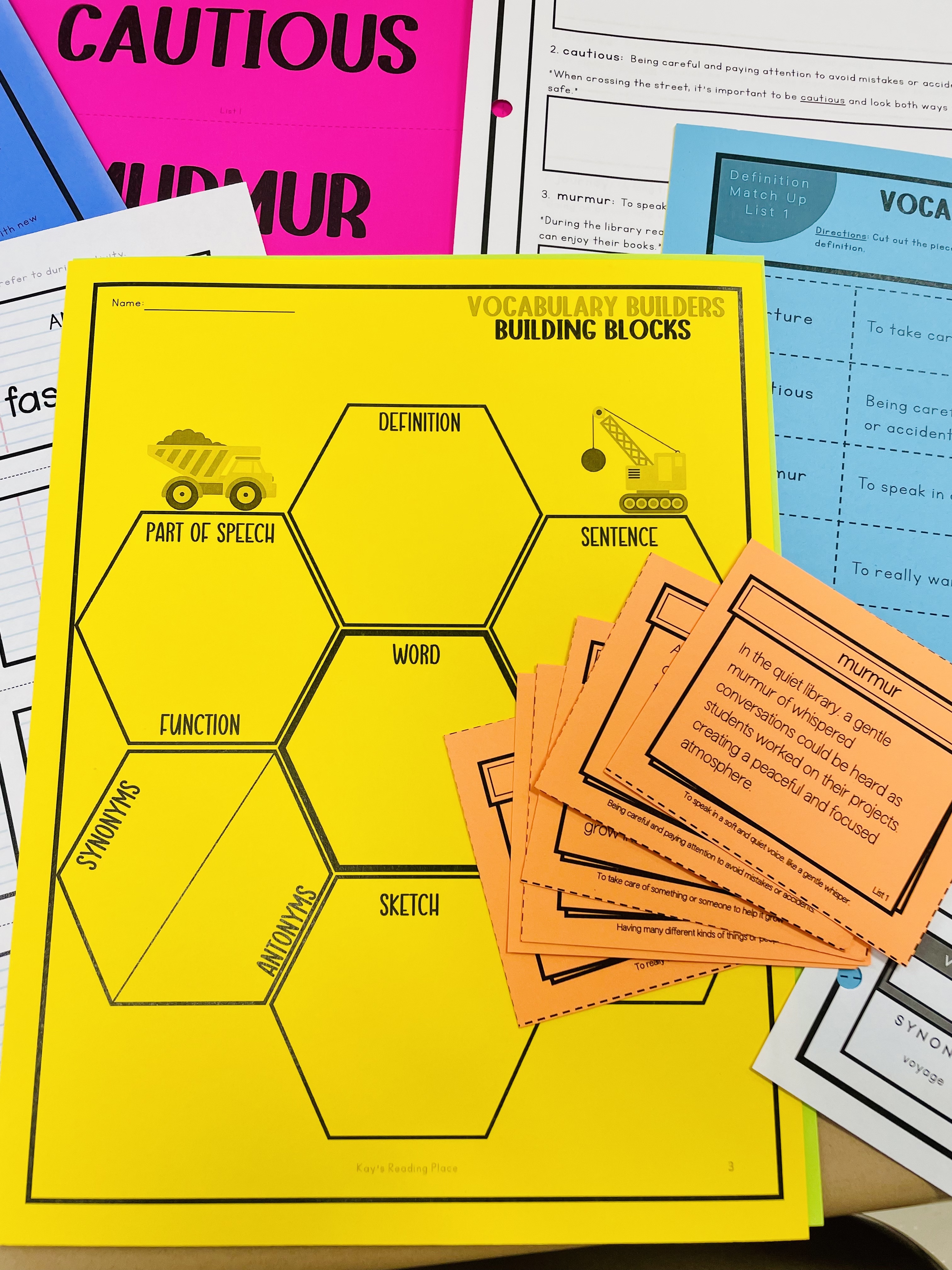
- Encourage students to create word maps or graphic organizers that include the word’s definition, synonyms, antonyms, and an original sentence (See the example).
- Example: For the word “analyze,” students could draw arrows connecting it to related words like “examine” and “study.”
- Interactive Activities:
- Engage students in interactive activities like vocabulary games, role-playing, or creating their own sentences using the words.
- Example: Have a vocabulary scavenger hunt where students find and use Tier 2 words from various sources in the classroom. Or engage students in a partner game of matching definitions to word incorporating elimination and problem solving.
- Repetition and Reinforcement:
- Provide multiple opportunities for students to encounter and use the words across different subjects and activities. Use multiple modes of encountering these words.
- Example: Incorporate Tier 2 words into daily routines, ensuring students see and hear them regularly.
- Real-world Connections:
- Relate words to real-world situations or current events to deepen students’ understanding and show the relevance of the vocabulary.
- Example: Discuss the word “evaluate” in the context of assessing the pros and cons of different decisions in their lives.
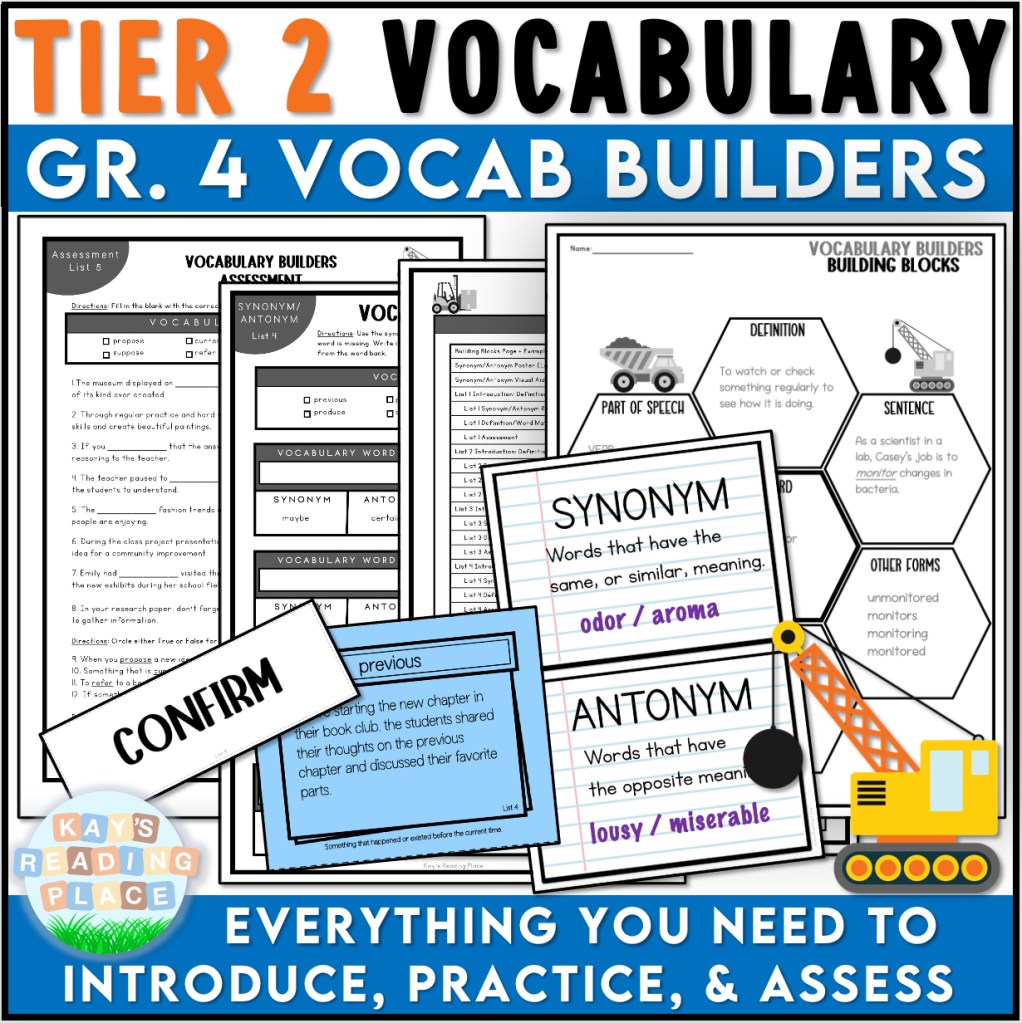
By adopting best practices, we can create a language-rich environment that empowers our upper elementary students with the Tier 2 vocabulary they need to excel academically and beyond. Empower your students with the linguistic tools they need for a lifetime of success. Click the resource below to get you started with 40 Tier 2 words for grades 3-5. Word wall cards, games, practice activities, introductory activities, word maps, and assessments are all included.
 Kay's Reading Place
Leave a comment